
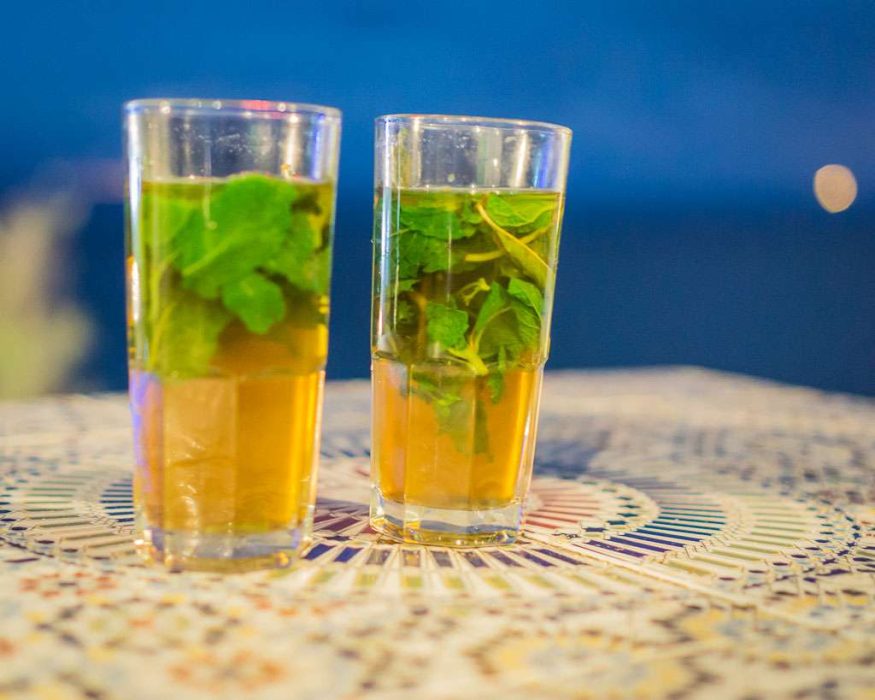
Tangier has one of the most unique food scenes in Morocco, and every time I visit, I’m reminded why I never try to rush meals here. This is a city where street food, seafood, cafés, and bakeries tell the story better than monuments. Influenced by Morocco, Andalusia, and Spain, Tangier’s cuisine is coastal, practical, and deeply social — food you eat standing, sharing, talking, and always with bread nearby.
As a Moroccan who travels the country for food, Tangier feels different from the first sip of tea. The flavors are lighter, the seafood fresher, and the habits unmistakably northern. You don’t come here for complicated plates — you come to eat well, often, and like locals do.
Tangier’s Food Scene: Shaped by the Sea & History
Tangier sits between the Atlantic Ocean and the Mediterranean Sea, and that geography defines everything on the table. I like to start near the port, where grilled sardines and fried calamari are prepared just hours after the catch arrives. Fish tagines here are lighter than elsewhere in Morocco, often finished with olives and preserved lemon, letting the seafood speak for itself.
There’s also a strong Spanish and Andalusian influence that you taste immediately. Bocadillos, paella, chickpea-based dishes, and café pastries feel completely natural in Tangier — not imported, but inherited.
Street Food in Tangier: What Locals Actually Eat
When I’m in Tangier, mornings often start with atay chamali. It’s served very hot, sweet, and fragrant, always in a tall glass cup with fresh mint. This is everyday tea — not ceremonial — drunk standing, chatting, and usually paired with bread or cheese.
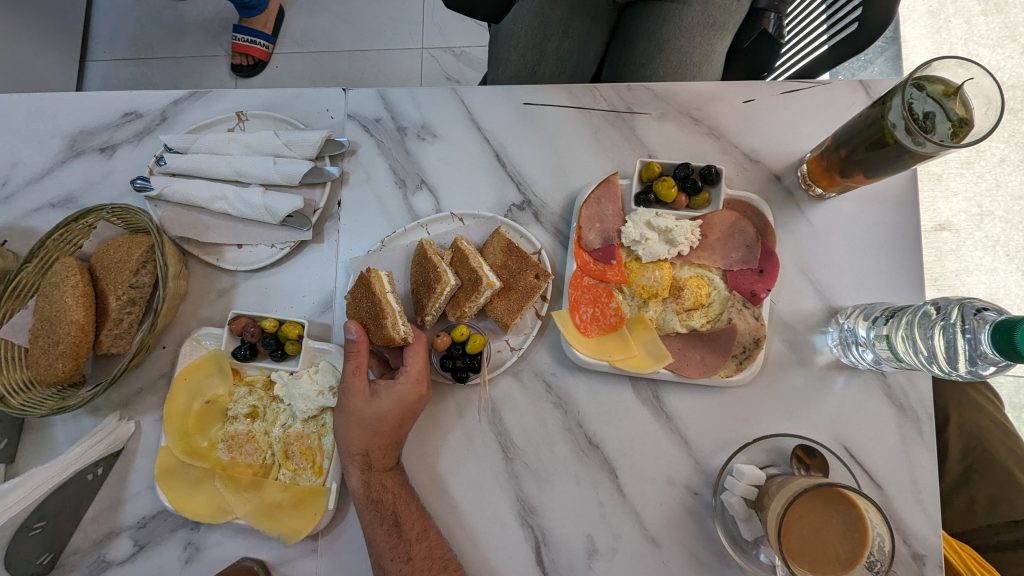
A classic chamali breakfast follows naturally: fresh jben, olive oil, black olives, and warm bread. It’s simple, nourishing, and still very common in local neighborhoods. This kind of breakfast tells you a lot about Tangier — modest, honest, and satisfying.
Bocadillos are everywhere, and they’re one of my favorite street foods in northern Morocco. Think of them as the Subway of Tangier: you choose your protein — tuna, chicken, beef, shrimp — then add carrots, lettuce, pickles, tomatoes, onions, and finish with mayo, ketchup, or harissa. Fast, filling, and deeply Tangier.
I never leave without a stop for kalinti (caliente), a soft chickpea-flour tart with Spanish roots, eaten hot with cumin and pepper. And if there’s tea or coffee involved, fakoussa, a dry and slightly sweet local bread, is the perfect companion.
Seafood in Tangier: Simple, Fresh & Mediterranean
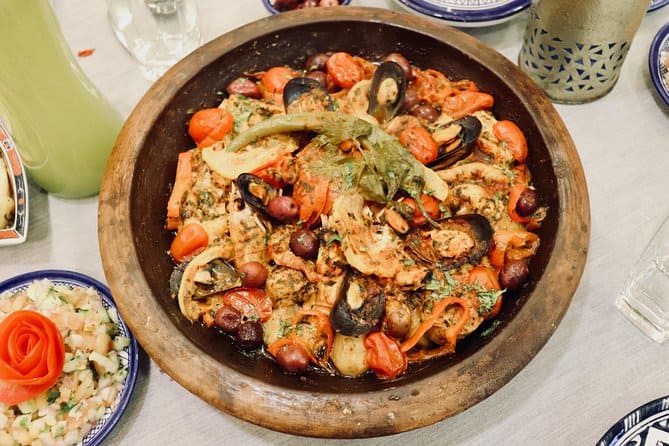
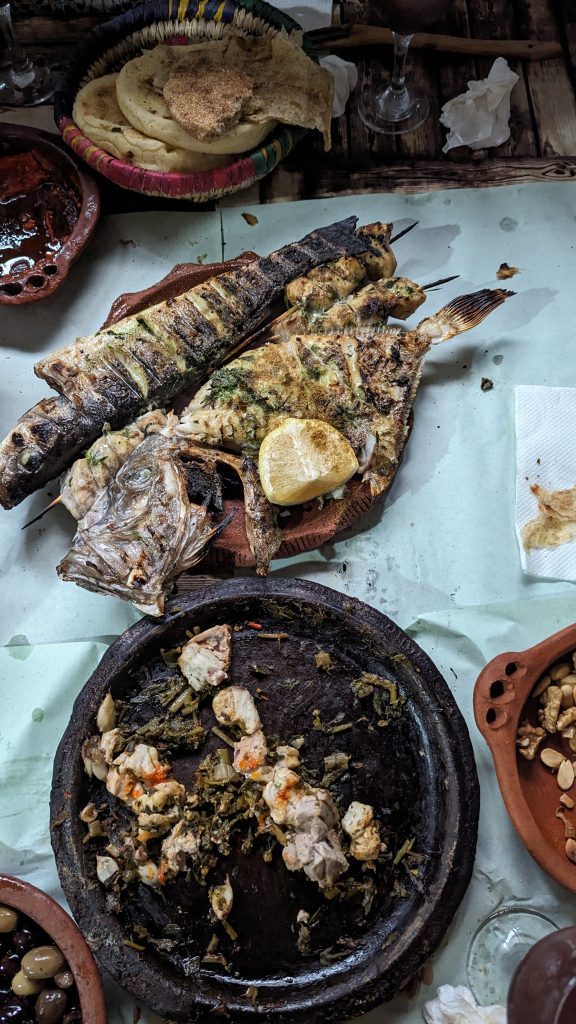
Seafood is not a specialty in Tangier — it’s daily food. I usually gravitate toward grilled sardines with chermoula, fried calamari eaten straight from paper cones, or mixed seafood platters shared with friends by the sea. Spanish-style seafood, including paella and garlic shrimp, feels completely at home here.
What I love most is the simplicity. Tangier doesn’t hide seafood under heavy sauces. The grill, the lemon, the spice market — that’s enough.
Best Local Eateries in Tangier (Where I Actually Eat)
When it comes to restaurants, Tangier rewards simplicity. These are places I return to, not for decoration, but for flavor:
- Restaurant Populaire Saveur de Poisson – legendary for ultra-fresh seafood and a daily fixed menu, with unlimitted homa made drink refill (it’s a secret reciep juice)
- Tip : They don’t take reservations and it get’s full pretty quick so you better show up early
- El Tangerino – modern seafood with strong local roots and port views
- Kasbah Restaurant – Moroccan classics with a northern touch
- Dar Harruch – home-style cooking in an intimate setting
These are not tourist traps. They are places Tangier trusts.
What to Do in Tangier as a Food Lover
To really understand Tangier’s food scene, walking is essential. I always recommend exploring the medina slowly, stopping for tea, watching bakeries at work, and eating seafood where it’s grilled the same day. Talking to vendors and café owners often teaches you more than any guidebook.
This approach is exactly what we follow on our Tangier Food Tour, where the focus is on real food, real places, and real conversations.
Visiting Tangier as a Day Trip from Rabat or Casablanca
Tangier is surprisingly easy to reach thanks to Al Boraq:
- Rabat → Tangier: about 1h20
- Casablanca → Tangier: about 2h10
This makes Tangier perfect for a food-focused day trip, especially if you’re already in Rabat or Casablanca. We often organize private Tangier food experiences without the need to change hotels.
Why Tangier’s Food Scene Stays With You
Tangier’s cuisine blends the sea, Morocco, Andalusia, and Spain in a way that feels effortless. It’s not designed for visitors — it’s lived daily. Every glass of tea, every sandwich, every grilled fish carries a bit of the city’s history.
If you eat Tangier the right way, you don’t just taste it — you understand it.
Ready to Experience Tangier Through Food?
Join us for a walk, a meal, and a city seen through its kitchens.
👉 Book the Tangier Food Tour here:
🔗 https://moroccanfoodtour.com/tour/tangier-food-tour/
Final Thoughts from a Food Lover
Tangier is not just another destination for me — it’s the city where I was born. We lived there for three years, and even after we moved, Tangier was always part of our lives through long family summer vacations. Every summer, the city fills with Moroccan holidaymakers, cafés overflow, beaches get loud, and kitchens work nonstop. I fell in love with Tangier then, and honestly, I still am.
The food is what I crave the most. A hot glass of atay, a quick bocadillo, grilled fish by the port — these are flavors that stay with you long after you leave. Tangier is a city I never try to “finish.” Every visit ends with something I didn’t plan, a meal I wasn’t expecting, a spot I promise myself to return to next time.
If you eat where locals eat and let the city set the pace, Tangier always gives you something real. And if you want to experience it through shared tables, walks, and stories, you know where to find us.
Until the next foodie talk — and the next glass of hot atay. 🍵
Mohamed
Moroccan Food Tour
Leave a Reply