

From Tagines to Tacos: How Moroccan Food Travelled the World
In the summer of 2024, a viral online poll championed by Gordon Ramsay crowned Moroccan cuisine the best in the world. Millions voted, and in the final round our food went up against Mexico — tagines against tacos — and won. As a Moroccan who spends most days feeding travellers, I smiled at the headline, but I didn’t need a poll to tell me what I already see on every tour: our food has been quietly packing its bags for decades.
That’s the story I want to tell here. Not “Moroccan food is delicious” — you already know that. The more interesting story is what happens when a cuisine leaves home. Because recipes travel, and as they travel, they change. A tagine cooked in San Francisco is not the same as one cooked in a Fez riad, and that’s exactly what makes the journey worth talking about.
A cuisine that was always going to travel
Moroccan food was never sealed off from the world. It’s the sum of everyone who ever passed through here — the Amazigh who invented both the tagine and couscous, the Arab and Andalusian arrivals, Mediterranean and sub-Saharan trade, Jewish communities, and a French colonial chapter that left its mark on our bread and pastries. Couscous, the dish we gather around every Friday, is now recognised by UNESCO as intangible cultural heritage of humanity.
So when I see our food showing up on menus abroad, it feels less like an export and more like a homecoming for a cuisine that was always a crossroads. The only difference now is the direction of travel: outward.
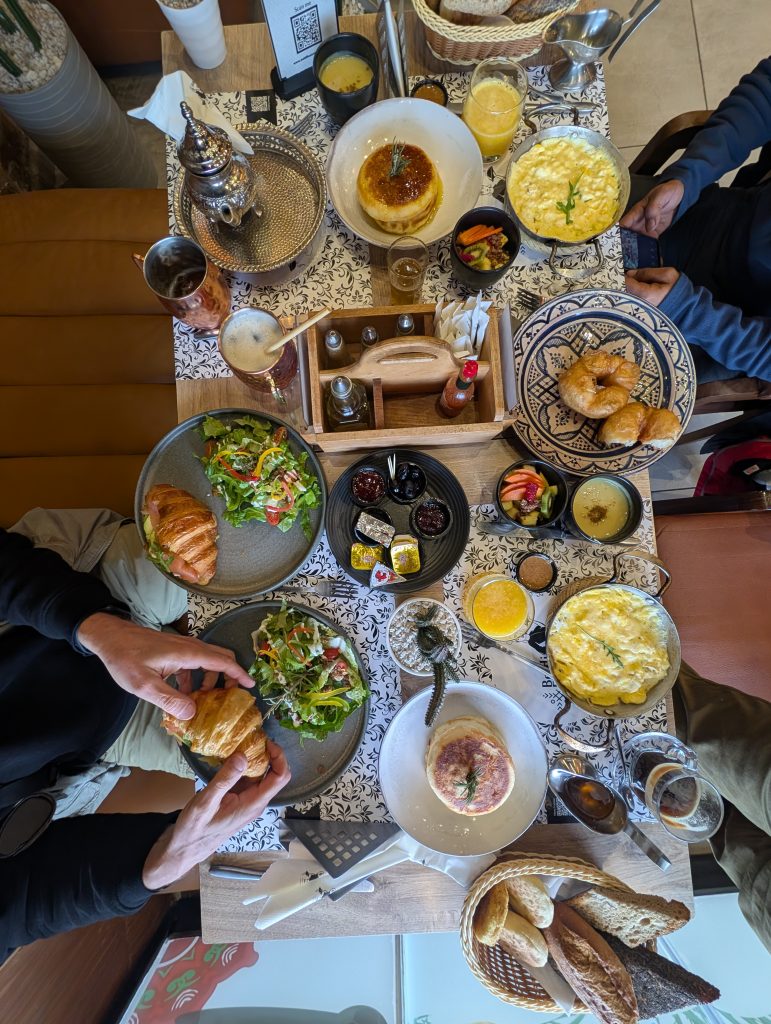
When the recipe crosses the border, it adapts
The clearest example is couscous. In France it’s become one of the most eaten dishes in the country — the “couscous royale,” piled with lamb, chicken and merguez, is a fixture of Paris bistros. But what fascinates me most is the newer idea taking hold across Europe: the couscous bar. In Royan, in Madrid’s Lavapiés (a little spot called Souksou), you now build your own bowl — pick your grain, your vegetables, your meat, your sauce — fast, casual, to take away.
Purists might wince. I don’t. The soul of the dish — the hand-rolled semolina, the slow broth, the generosity — is the part worth protecting. The format is allowed to change. A Moroccan grandmother would never serve couscous in a paper bowl on a Tuesday afternoon; a busy office worker in Madrid is thrilled to. Both are keeping the dish alive, just in different worlds.
The people who carried it
Dishes don’t move on their own — people carry them. And the people who carried Moroccan food abroad tell you everything about how a cuisine survives.
Some kept it traditional and simply raised it. Fatima Hal opened Mansouria in Paris back in 1984 and became known as the grande dame of Moroccan cuisine in France, proving our food belonged in fine dining. In San Francisco, chef Mourad Lahlou earned a Michelin star for his Moroccan cooking — the first Moroccan restaurant in the United States to do so — by honouring the techniques while plating them for a new audience.
Others adapted more freely. Najat Kaanache, named Best Moroccan Chef in the World, trained in some of the planet’s most famous kitchens and now runs restaurants in Fez and in Mexico — the most literal “tagines to tacos” bridge I can think of. And then there’s a story I love telling: Aneesa Waheed, born in India, fell so hard for Moroccan food on a trip to Marrakech that she went home to New York and built Tara Kitchen into a small empire — half a dozen locations making our cuisine accessible to Americans, even giving comfort foods like shepherd’s pie a Moroccan twist. A woman from Mumbai spreading Moroccan flavour across New Jersey and Manhattan. That’s how far our food has walked.
You even see it on television now — MasterChef editions from Argentina to Canada have set contestants the challenge of a proper tagine or couscous. Our dishes have become a benchmark.
Fusion, at home and abroad
The travelling isn’t only outward. Here in Morocco, a young generation is remixing our own classics with confidence.
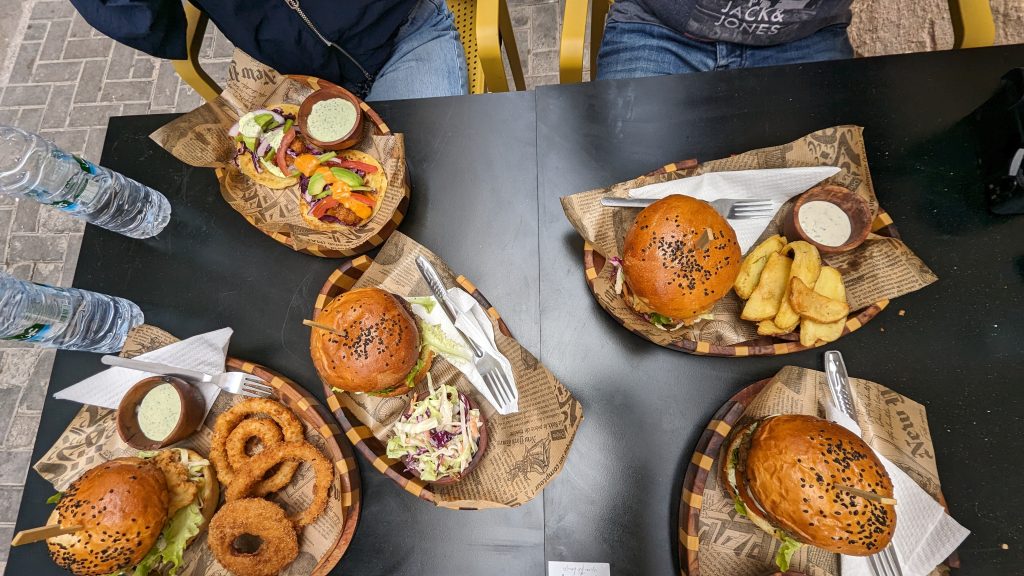
In Marrakech, Beldi Fusion Kitchen plates traditional flavours with contemporary technique in a beautiful modern room — I go often, and honestly I’ve never ordered a single thing off that menu that disappointed me. In Casablanca, a homegrown chain called Crusty has taken the global smash-burger-and-crispy-chicken format and threaded harissa and chermoula through it — “international format, local soul,” as they put it. Ten years ago, some people would have called this a betrayal of tradition. I see it differently. Fusion isn’t the death of a food culture; it’s proof that it’s still living, still curious, still ours.
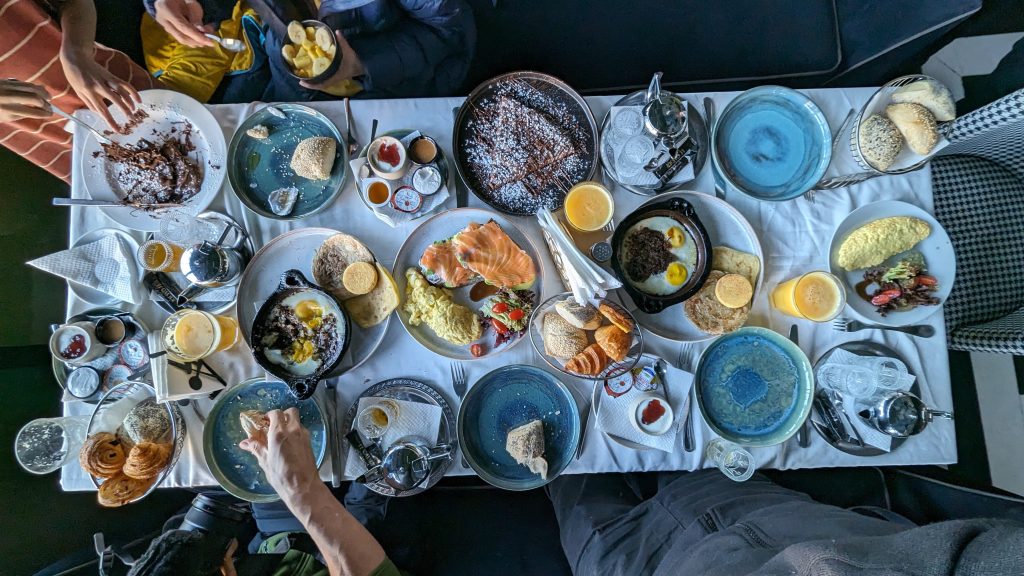
And once you start looking, the playful reinventions are everywhere. In Essaouira I’ve had msemmen folded like a taco and a fish burger that only a port town like that could pull off; at Dar Baba, chicken tagine reborn as croquettes — the whole flavour of the dish in one crisp bite. In Casablanca, Chfinja Masters has taken sfinj, our humble fried dough, and run with it in every direction, savoury and sweet. Every one of these made me grin, because they aren’t copying anyone — they’re taking something completely ours and giving it a new shape.
Honestly, I think we’ve barely started. So many of our dishes are ready to travel: a briouate or a pastilla would be at home on a fine-dining tasting menu and just as happy in a street-food window. And half our tagines could become sandwiches tomorrow — we knew that as kids. The best leftover sandwich of my childhood was cold chicken tagine, the one with olives and preserved lemon, packed into a crusty roll with a handful of fries pushed in on top. No restaurant taught us that. We just knew good food shouldn’t go to waste, and that a great filling deserves bread wrapped around it. That, to me, is exactly how a cuisine keeps moving — not in a lab, but in a kitchen, with someone who loves it improvising.
It was never really about the recipe
Here’s the part I always come back to. You can buy ras el hanout online now. You can find a tagine on a menu in London and a couscous bar in Madrid. The ingredients and the recipes have gone global — and that’s wonderful.
But the one thing that can’t be shipped is the moment. The shared plate in the middle of the table. Bread torn by hand instead of sliced. Mint tea poured from a height until it foams. The vendor in the medina who’s been making the same thing for thirty years and hands it to you before you’ve even paid. A beautiful tagine abroad can spark the memory of that — but it can’t manufacture it. That belongs to the place.
That’s really what we do on our tours and in our cooking classes: not just teach the recipe, but hand you the moment.
Let the food lead you to where it began
So if a bowl of couscous in Europe, or a tagine at a fusion spot near home, has ever made you curious — follow it. Let the dish be the invitation, and let it lead you all the way back to the source, where the tea is poured a little higher and the bread is always warm. When you’re ready, come and taste it with us.
And if you’re gathering ideas for where your next appetite might take you, Skyscanner’s guide to fashionable foods around the world is a good place to start dreaming. Wherever you land, some of the best travel memories are still made around a table.
Leave a Reply